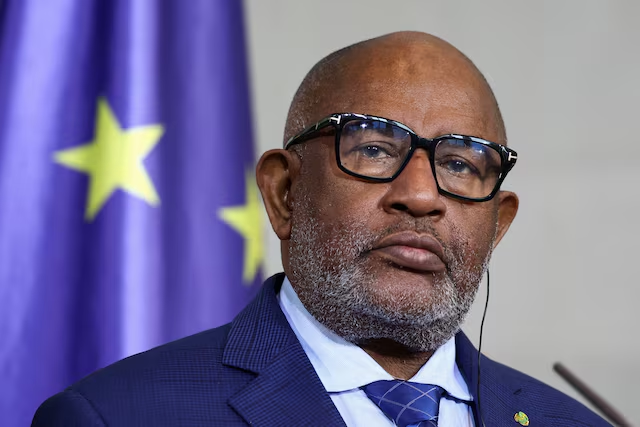
In a recent and highly controversial announcement, Comoros President Azali Assoumani has declared his intention to hand over power to his son, Nour El Fath, when he steps down in 2029. This development has sparked widespread debate and concerns about the potential establishment of a dynastic rule in the island nation.
The announcement was made during a speech on the island of Moheli, confirming long-standing accusations that President Assoumani has been grooming his son for leadership. Critics argue that this move is unacceptable and threatens the democratic principles of Comoros.
President Assoumani, whose re-election last year faced allegations of voter fraud, has already positioned his son in a significant role within the government. Nour El Fath currently coordinates government affairs and wields considerable influence over the cabinet. Despite this, El Fath has previously insisted that Comoros is not a monarchy and that his father’s decision does not alter that fact.
The opposition has been vocal in their rejection of this plan. Abdallah Mohamed Daoudou, a spokesperson for the opposition coalition, stated unequivocally, “The Comorian people and politicians will not accept the installation of a dynastic power or a monarchy in the Comoros.”
Comoros, with a population of around 800,000, has experienced numerous coups and attempted coups since gaining independence from France in 1975. President Assoumani himself first came to power in 1999 through a coup and has since won four elections. In 2018, constitutional reforms extended the requirement for the presidency to rotate among the three main islands from every five years to ten. This change means that El Fath would not be eligible to replace his father at the end of the presidential term in 2029 unless the constitution is amended once again.
As the political landscape in Comoros evolves, the world watches closely to see how this situation will unfold. The announcement has undoubtedly set the stage for intense political debates and potential unrest in the coming years. The question remains: Will Comoros embrace a new era of dynastic leadership, or will the opposition and the people of Comoros rally to uphold their democratic values?